The Gambler’s Fallacy | How To Take Better Decisions
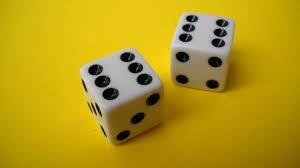
Have you ever found yourself convinced that after a streak of bad luck, your luck is bound to change? Imagine you’re playing Ludo, and for seven turns in a row, you haven’t rolled a six. You start feeling certain that on the eighth try, you’re certainly getting a six. . However, the probability of rolling a six remains the same at just 16.6%. In behavioral science, this is known as The Gambler’s Fallacy. With this article delight, get to know how these instincts can sometimes lead us astray and impact our decision-making in surprising ways. By understanding the psychological concept, we can learn to make more informed and rational choices in our lives.
The Gambler’s Fallacy Explained
The gambler’s fallacy, also known as the Monte Carlo fallacy or the fallacy of the maturity of chances, is a cognitive bias that leads people to believe that the probability of a random event is influenced by previous occurrences of that event. In other words, if a particular outcome has happened frequently in the past, we tend to think it is less likely to happen in the future, and vice versa. For example, if you flip a coin and it lands on heads several times in a row, you might start to believe that tails is “due” to come up next. However, each flip of the coin is an independent event with the same probability—50% for heads and 50% for tails—regardless of previous outcomes. The gambler’s fallacy tricks us into thinking that past events influence future probabilities, even when each event is actually independent of the others.
How it all started | A Little Historical Context
An account of the gambler’s fallacy was first published by French polymath Marquis de Laplace in 1820. In A Philosophical Essay on Probabilities, Laplace noticed that men who wanted sons thought that each birth of a boy would increase the likelihood of their next child being a girl. Beliefs that resembled gambler’s fallacy were first seen in experimental settings during the 1960s, when researchers were exploring how the mind makes decisions using probabilities. In these experiments, subjects were asked to guess which of two colored lights would light up next. After seeing a succession of one color being illuminated, researchers noticed that subjects were much more likely to guess the other.
The most famous example of gambler’s fallacy took place at the roulette tables of a Monte Carlo casino in 1913. For the last 10 spins of the roulette wheel, the ball had landed on black. Convinced that a red outcome was long overdue, gamblers began betting heavily against black. However, the ball continued to land on black. As this trend persisted, their conviction grew that the next spin would land on red, leading to increased crowds and larger wagers—and consequently, greater losses. The ball landed on black for 26 consecutive spins before finally landing on red, bringing the streak to an end. By then, the losses were staggering, and the casino had made a fortune. This event became known as the “Monte Carlo fallacy,” a classic example of the gambler’s fallacy.
( Read the whole incident here : https://en.wikipedia.org/wiki/Gambler%27s_fallacy )
Real-Life Examples and Implications
Gambling Addiction: Compulsive gamblers may continue betting after a series of losses, believing that a win is due to balance out the losses, which can lead to severe financial and personal consequences.
Traffic Lights: Drivers might assume that after being stopped at several red lights in a row, they are due a green light, potentially leading to risky driving behaviors out of frustration or impatience.
Weather Predictions: You might expect that after several days of rain, a sunny day is due. Even though weather patterns are independent events influenced by complex atmospheric conditions.
Stock Market: Investors may believe that after a series of declines in a stock’s price, a rebound is imminent, leading them to hold onto losing stocks longer than they should. Conversely, they might sell winning stocks prematurely, fearing a decline after a series of gains.
Insurance: Policyholders might believe that after not filing a claim for many years, they are “due” for a significant event, potentially influencing their decisions on coverage and deductibles.
Elections: Voters might assume that after a political party has won several elections in a row, they are less likely to win the next one, even though each election is determined by a multitude of independent factors.
Education: Teachers might assume that after several disruptive classes, a calm class is due, potentially leading them to relax their behavior management strategies.
Customer Service: Representatives might think that after dealing with several difficult customers, they are due for an easy interaction, potentially impacting their preparation and patience.
How to Avoid the Gambler’s Fallacy
Seek External Perspectives: Discuss your decisions with others to gain different viewpoints. External input can provide objective insights that counteract biased thinking.
Recognize Cognitive Biases: Be aware of common biases like the gambler’s fallacy. Self-awareness helps you identify when you’re falling into these mental traps.
Focus on Current Information: Base your decisions on present data and evidence rather than past outcomes. This approach ensures that your choices are rational and informed.
Educate Yourself on Probability: Understand that each event, like a coin toss or roulette spin, is independent. Knowing that past outcomes do not affect future probabilities is crucial. You might learn about independent events and probability theory to better understand how randomness works.
Practice Mindfulness: Stay present and conscious of your thought processes. Mindfulness helps you recognize and interrupt patterns of irrational thinking.
Final Takeaway
The gambler’s fallacy is a common cognitive bias that can lead us to make irrational decisions based on false beliefs . Whether in games, investments, or everyday life, overcoming the gambler’s fallacy can help us take better decisions and avoid unnecessary risks. Remember, every roll of the dice, spin of the wheel, or flip of the coin is an independent event. The universe doesn’t owe us a win after a series of losses, and expecting otherwise can lead to poor choices and unnecessary risks. So accept the randomness of life, make informed decisions, and you’ll be better equipped to handle whatever comes your way.
Read also : Easily Grasp Complex Concepts Using Bloom’s Taxonomy https://thebrightdelights.com/easily-grasp-complex-concepts-using-blooms-taxonomy/