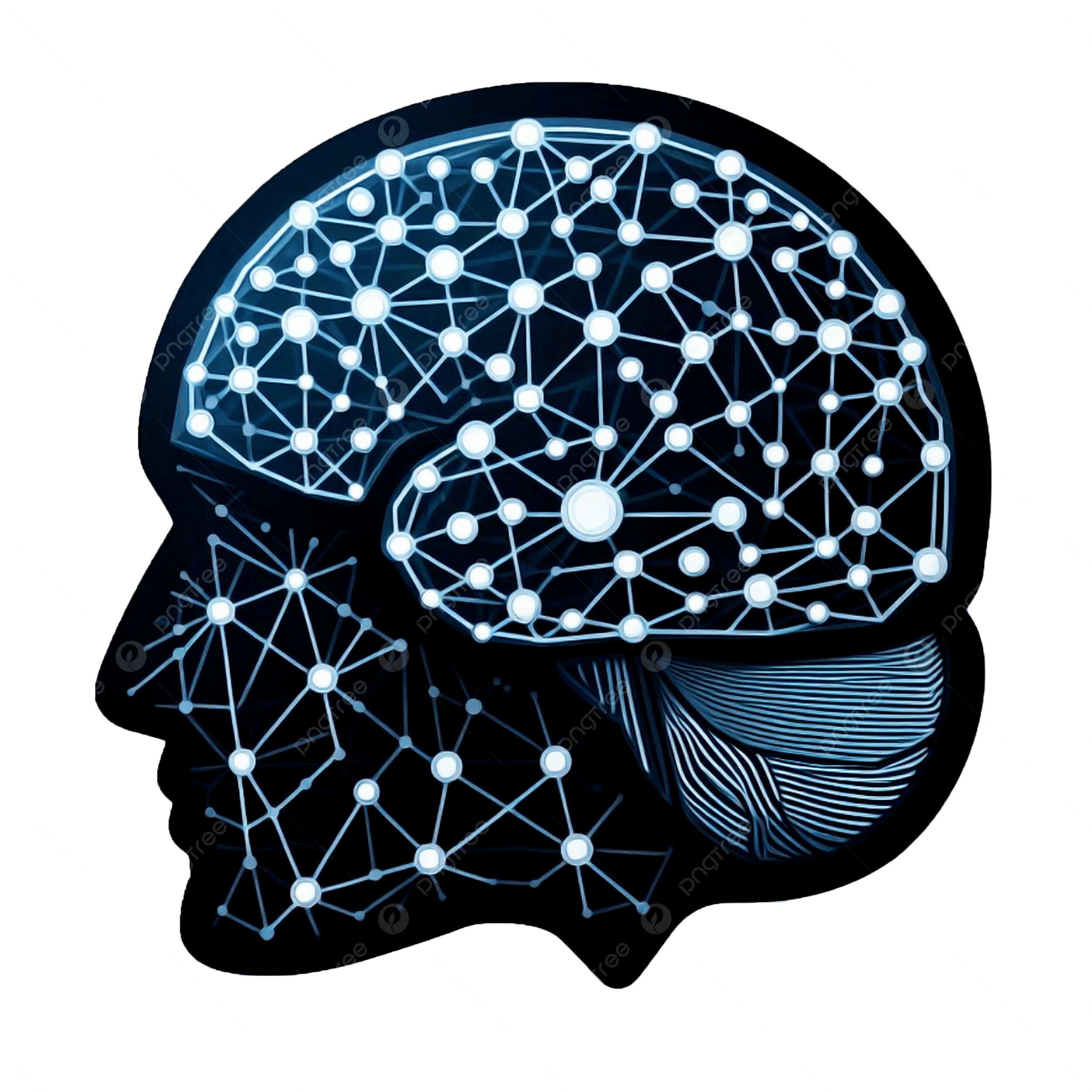
The Leonardo da Vinci Effect: How Invariant Representations Make You Smarter
What makes some people exceptionally good at learning, solving problems, and coming up with new ideas? Is it simply that they know more than others, or is there something else happening in the way their minds process experiences? In this article delight, we will explore a fascinating concept called invariant representations (IR), a simple but powerful idea that helps explain how our brain turns individual experiences into general patterns and then uses those patterns to understand new situations. Specifically, we will also look at the Leonardo da Vinci Effect: how exposure to different subjects and experiences can help us build more connections between ideas. Most importantly, we will see how this concept can be applied in everyday life. We will try to understand why you simply need to give your mind better and more varied experiences to be a genius like Leonardo da Vinci.
What Are Invariant Representations?
The term invariant representation may sound complicated, but the basic idea is quite simple.
Our brain is constantly receiving information through our senses. But our brain doesn’t store every experience exactly as it happened. Instead, it tries to find patterns that remain useful across different experiences.
For example, you may have seen hundreds of different chairs. Some are wooden, some are plastic, some have arms, some don’t, and some look completely different from one another. Yet you can still recognize a new object as a chair.
Your brain has created a general mental representation of “chair.” That general representation helps you understand something new without having to start from zero every time.
This is the basic idea behind an invariant representation: the brain extracts something stable and meaningful from changing, specific experiences.
How Our Mind Works with Invariant Representations
Learning with Invariant Representation
When we experience something repeatedly, our brain begins looking for patterns. You might make several mistakes while managing a project. After some time, you may notice that projects often go wrong when expectations aren’t clearly communicated. That pattern becomes part of your mental model. The next time you manage a project, you may automatically pay more attention to communication. This is learning in action.
Experience gives us specific examples. Our brain extracts patterns from them. Those patterns become tools for dealing with future situations.
The more useful patterns we develop, the better prepared we become to deal with unfamiliar situations.
Anticipation with Invariant Representation
The process works in the opposite direction too. Once your brain has learned a pattern, it can use that pattern to interpret a new experience.
For example, imagine that you’ve never visited a particular restaurant before. As soon as you enter, you notice the layout, the menu, the staff, and the way people are being served. You don’t consciously analyze every detail. Your previous experiences with restaurants give you expectations about what is likely to happen. This is the movement from:
General pattern → new specific situation
Your brain uses what it has already learned to make sense of what it encounters next. This is one reason experience often makes people better at handling unfamiliar situations.
This Is Where The Leonardo da Vinci Effect Becomes Interesting
Leonardo da Vinci is a fascinating example of what can happen when a person refuses to limit learning to one area. He was interested in painting, anatomy, engineering, architecture, mathematics, nature, mechanics, and many other subjects. The important lesson isn’t simply that he studied many subjects. It is that knowledge from different areas can create connections.
An idea learned in one field can change the way you look at a completely different problem. For example, studying anatomy can improve an artist’s understanding of movement. Studying nature can inspire an engineer. Studying psychology can change the way a marketer thinks about communication. When knowledge from different areas meets, new combinations become possible.
This is one way to understand what we might call the Leonardo da Vinci Effect: deliberately exposing your mind to different kinds of knowledge and experiences so that it has more patterns and connections to work with.
Intelligence Is Not Just About Knowing More
We often think intelligence means having a large amount of information stored in our heads. But information alone isn’t always useful. Imagine having hundreds of books but never being able to connect the ideas inside them. The real advantage comes from being able to recognize patterns, connect ideas, and apply what you’ve learned to new situations. Someone who has studied only one subject may know that subject extremely well. But someone who has knowledge across several areas may sometimes see connections that are invisible from within a single field. This doesn’t mean that everyone needs to become a polymath.
It means that intellectual variety can make our thinking more flexible.
Routine Can Become a Mental Comfort Zone
Routine is useful. It saves time, reduces decision fatigue, and helps us become efficient. But too much routine can also limit the kind of information we expose ourselves to. If you always read the same kind of books, follow the same opinions, interact with the same people, and approach every problem in the same way, you may become very efficient, but not necessarily more adaptable. The problem becomes visible when circumstances change. A strategy that worked perfectly for years may suddenly stop working because the environment has changed. This happens in businesses, careers, relationships, and everyday life. The ability to adapt depends partly on having enough mental patterns to draw from when the old pattern no longer works.
Build a “Pattern-Rich” Life with Invariant Representations
You don’t need to study ten subjects simultaneously.
You don’t even need to make major changes to your lifestyle.
Instead, try to build a life that gives your mind varied and meaningful input.
Read something unfamiliar.
Learn something new.
Meet someone different.
Visit somewhere new.
Question an old assumption.
Try something you’ve been avoiding.
Then stop and ask yourself what pattern you can take from the experience.
Over time, these small experiences accumulate. And the connections between them can become more valuable than the individual experiences themselves, just like the Leonardo Di Vinci did.
Final Takeaway | Invariant Representations
The Leonardo da Vinci Effect is ultimately about one simple idea: your mind becomes richer when you give it richer experiences. Every new book you read, skill you learn, person you meet, place you visit, or problem you solve gives your brain new experiences from which it can recognize patterns and build connections. You don’t have to become a Leonardo da Vinci. But you can adopt one habit that he embodied so well: stay curious beyond your usual boundaries. Learn something outside your field. Question what you already believe. Try something unfamiliar. Look for connections between seemingly unrelated ideas. Because intelligence isn’t only about how much you know. It is also about how many meaningful connections you can make between what you know.
Further insights, read The Creative Act: A Way of Being by Rick Rubin https://link.amazon/B036Ft0c9
Read another article from TBD : The CARVER Method: A Military Framework for Smarter Decision-Making https://thebrightdelights.com/the-carver-method-a-military-framework-for-smarter-decision-making/