How To Benefit From The Zeigarnik Effect
Imagine a time when you couldn’t fall asleep because you were thinking about a task you hadn’t finished. Maybe it was a school project or a chore at home. The feeling of worry and stress can be pretty strong in moments like that. But have you ever noticed that once you finish a task, you might not think about it much anymore? It’s like your brain clears it away. This is because of something called the Zeigarnik effect. It’s a fancy name for a simple idea: our brains tend to remember things that are not finished, but they forget things that are already done. The Zeigarnik effect helps explain how our memory works in a special way. It’s like a mental highlighter for things we need to finish. In this article delight, we’ll explore more about this and How To Benefit From The Zeigarnik Effect. Without delay, let’s begin.
What Is The Zeigarnik Effect ? Understanding The Zeigarnik Effect with examples
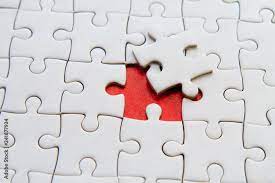
The Zeigarnik effect is a theory attributed to Lithuanian psychologist Bluma Zeigarnik describing the tendency of the human memory to remember interrupted or incomplete tasks more easily than completed ones. Let’s say you had a puzzle with missing pieces. You’d probably want to finish it because it feels incomplete. But once it’s done, you might not remember it as vividly. However, you could also be more likely to forget the details of tasks completed in full, uninterrupted. This is because the human brain has a tendency to “dump” or erase information that may no longer be needed, removing it from your memory. For example, after you’ve finished reading a captivating novel from cover to cover, the nuances of the plot might start to blur. While you might recall the main storyline and characters, the smaller details may become less vivid in your memory.
A Little History Behind The Zeigarnik Effect
Lithuanian psychologist Bluma Zeigarnik discovered this theory after being amazed by a café waiter’s ability to remember her and her colleagues’ lengthy food and drink orders without writing them down. However, when she returned to the café a short time later to retrieve something, the waiter didn’t remember serving her party. Fascinated, Zeigarnik questioned the waiter about his memory. He admitted to frequently forgetting all orders once they’re delivered and all patrons once their check is paid.The waiter’s uncompleted tasks were all that mattered — and that is how he was able to do such a fantastic job.
As a scientist, Zeigarnik started experiments ( Details here https://codeblab.com/On-Finished-and-Unfinished-Tasks.pdf ) to test her observation. She asked probands to complete 15 to 22 tasks such as solving a puzzle, stringing beads, folding paper, or counting backward. She let half of the participants complete all of their tasks while she interrupted the other half before they finished. Zeigarnik then tested how many unfinished tasks the participants would remember. The experiment’s results were significant. Participants were twice as likely to remember incomplete tasks than complete ones.
How to use the Zeigarnik effect for you | Making the most out of the Zeigarnik effect
Find here Three Strategies on How To Benefit From The Zeigarnik Effect
Recall through interleaving
Interleaving is a powerful learning technique that capitalizes on the Zeigarnik effect, allowing us to retain information more effectively. When we engage in ‘massed practice’ (i.e., studying or practicing a single topic continuously), we may become overly familiar with it in that specific context. However, when we interleave our learning, we challenge our brains to make connections and distinctions between different concepts. This cognitive effort enhances our understanding and improves our long-term retention. For example, if you’re studying for an exam, consider mixing up the subjects you review rather than dedicating extended periods to a single topic. If you’re learning a musical instrument, practice different pieces or techniques in one session rather than focusing solely on one.
Leave Clues or Reminders
This is particularly helpful for tasks that may not be immediately urgent but still require attention in the future. Place a brightly colored envelope containing your bills in a noticeable location, like on your desk or kitchen counter. This visual cue will remind you to take care of your financial responsibilities. If you’ve decided to declutter and organize a specific area of your home, leave a visual symbol such as an arrow pointing to that area. Placing your gym shoes by the front door, for example, can serve as a visual reminder to stick to your exercise routine. By strategically placing sticky notes, visual symbols, or digital reminders in your environment, you create a tangible connection between your surroundings and the tasks you need to remember.
Catching People’s Attention With Cliffhangers
Cliffhangers aren’t just for TV dramas. They can be a powerful tool in various forms of communication. For instance, in presentations or speeches, you can introduce a thought-provoking question or a tantalizing piece of information early on. This creates a sense of curiosity and anticipation in your audience, motivating them to stay attentive until the conclusion. By leaving a narrative thread unresolved, you tap into the natural human inclination to seek closure, ensuring that your message remains at the forefront of their minds. Use the Zeigarnik effect in your marketing campaigns. Pose a scenario or problem that your product or service can solve, but don’t reveal the solution immediately. Create a sense of anticipation that encourages potential customers to engage further. If you’re a storyteller, whether in writing or verbal storytelling, introduce a narrative element that leaves your audience hanging.
Conclusion | How To Benefit From The Zeigarnik Effect
The Zeigarnik Effect offers powerful ways to improve memory and productivity. Take advantage of this psychology on How To Benefit From The Zeigarnik Effect to boost your productivity, improve memory, and keep people’s attention. The effect plays a crucial role in keeping us on track and ensuring that we complete our tasks. It’s like a built-in reminder system that nudges us to finish what we’ve started. Taking a step back and allowing our minds to process can lead to breakthroughs and better decision-making. In a world without this privilege for unfinished tasks, chaos would surely reign.
Read also : Top 5 Value Skills That Set You Apart Top 5 Value Skills That Set You Apart