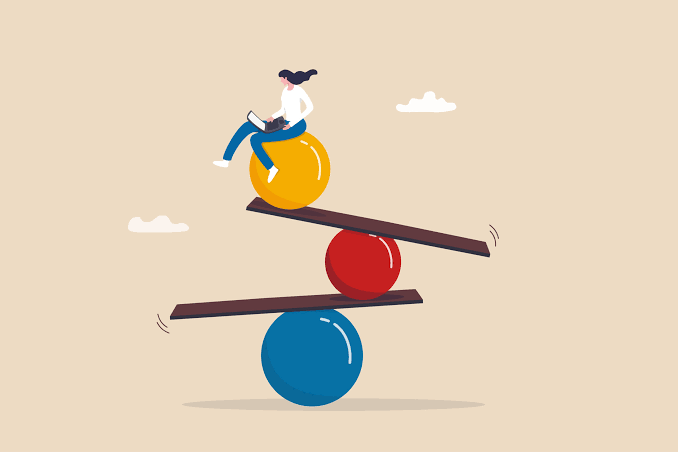
Short-Term vs Long-Term Balance | Why Balance Is a Long-Term Game
We all want a balanced life; a life where work, family, health, hobbies, and personal growth receive the attention they deserve. Yet, some days, work takes over everything. Other days, personal commitments leave little room for professional goals. This constant struggle to keep every aspect of life in balance can make us feel overwhelmed, guilty, and dissatisfied. Are we really failing at life balance, or are we simply expecting too much from each day? In this article delight, we will learn in the landscape of Short-Term vs Long-Term Balance, how to balance your life in the long run, not every day.
How to Balance Your Life in the Long Run, Not Every Day
Rethink What a Balanced Life Really Means
We often imagine balance as giving equal time and attention to every important area of our lives. But realistically, this is difficult to achieve. Different responsibilities and interests demand different levels of attention at different times. A week dedicated to an important professional project may leave less time for hobbies. A family vacation may temporarily put work on the back burner. Neither situation necessarily indicates an imbalance. The problem begins when we judge our entire lives based on how well we managed a single day or week.
Short-Term and Long-Term Balance
We try to fit every important aspect of life into the same 24 hours. This is short-term balancing, trying to maintain a balance between different areas of life every day or within a very short period. However, this approach can sometimes make us feel overwhelmed because our time and energy are limited. Your focus gets a lots of disturbances here.
Long-term balancing takes a different approach. Instead of trying to give everything equal attention every day, you allow yourself to focus more deeply on certain areas for a specific period ( not very long, though ) while temporarily giving less attention to others. Later, you deliberately shift your focus towards the areas that received less attention. For example, you might spend an entire week working on an important professional project. During that week, you may not have enough time for hobbies, social activities, or personal learning. Instead of feeling guilty, you focus on completing the project. Once it is finished, you can dedicate the following week or a few days to family activities, personal interests, or relaxation.
The goal is not to give everything equal time every day. It is to ensure that nothing important gets permanently neglected.
Embrace Different Seasons of Life
Life does not follow a fixed schedule, and neither should our expectations of balance. Think of life as having different seasons. Each season comes with its own priorities and demands.
For instance:
- During a demanding work project, professional commitments may temporarily take priority.
- When children are young, parenting may require a larger share of your time and energy.
- During a period of exhaustion, rest and recovery may become your primary focus.
Trying to maintain the same routine and distribute attention equally during all these phases can create unnecessary pressure. Instead, acknowledge your current season and adjust your priorities accordingly.
Review Your Balance Periodically | Balance Is About the Bigger Picture
While daily balance may not be necessary, completely ignoring balance for months or years can also create problems. This is why periodic reflection is important.
Take some time to evaluate how you have been spending your time and energy.
Ask yourself:
- Have I been giving enough attention to my health?
- Am I spending meaningful time with my family?
- Have I been making progress towards my professional goals?
- Have I neglected hobbies or activities that make me happy?
- Is there an area of my life that needs more attention in the coming weeks?
These questions help you identify patterns that may not be visible when you look at individual days. If one area has consistently been neglected, you can consciously redirect your attention towards it in the next phase.
Final Takeaway | Short-Term vs Long-Term Balance
A well-balanced life is not necessarily one in which every day looks perfect. Some days will be dominated by work, some by family, and others by personal interests or rest. The real question is not whether you managed to balance everything today. It is whether, over time, you are making room for the different things that make your life meaningful. Look at the bigger picture, adjust your priorities when necessary, and remember that a fulfilling life is built over time, not within a perfectly planned day.
Further insights : The Power of Full Engagement by Jim Loehr and Tony Schwartz https://link.amazon/B08buumD7
Read also : Paradox of choice: why less is more! https://thebrightdelights.com/paradox-of-choice-why-less-is-more/