Why Life Rewards the Curious More Than the Certain
Most of us like certainty. We want proof before we take a step, guarantees before we invest our time, and clear answers before we begin a journey. While caution has its place, many of life’s greatest discoveries don’t come with certainty attached. If we wait until we are completely certain, we may never begin at all. While certainty looks for proof before moving forward, curiosity is willing to take the first step and learn along the way. In this article delight, we’ll try to understand why life tends to reward those who remain curious, open-minded, and willing to discover things for themselves ( Why Life Rewards the Curious More Than the Certain ).
Why Life Rewards the Curious More Than the Certain
First, A tale of two friends !
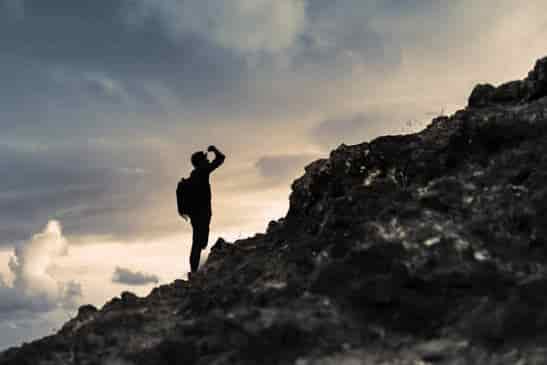
So you are standing at the foot of a mountain, wondering what the view from the top looks like.
As long as you stay at the bottom, all you can do is imagine it. You may have some idea of what awaits you at the summit, but it remains an assumption. However, as you begin climbing, your perspective gradually changes. With every step, you get closer to understanding what the view from the peak is really like. And once you finally reach the top, there is no need to guess anymore—you know exactly what the view is because you are experiencing it firsthand.
Now imagine that after your climb, a friend arrives at the base of the mountain and asks about the view from the summit.
You tell your friend, “It’s incredible. You really should climb up and see it for yourself. The journey is absolutely worth it.”
But your friend remains unconvinced. Wanting more details before committing to the climb, your friend asks you to explain exactly what makes the view so special.
So you try.
You describe the mountains stretching into the distance, the vast sky overhead, the trees below, and the beauty of the surrounding landscape. Yet as you speak, you realize something important: words are unable to fully capture what you experienced. The real value lies in the experience itself. Once an experience is reduced to descriptions and information, something essential gets lost.
Your friend, however, assumes that your description tells the whole story.
After listening, your friend says, “I can already see mountains, trees, and the sky from here. Why should I go through all the effort of climbing? It seems like a lot of work for something I can already understand from where I am standing.”
But you know something your friend does not.
You know the climb is worthwhile because you have seen the view from the top. Yet no matter how carefully you explain it, you cannot transfer that experience to someone else through words alone.
The only way your friend can truly understand is by becoming curious enough to make the journey personally. Even if you show photographs or videos of the breathtaking view, they remain only a representation—a shadow of the real experience.
Some things in life can be described. But the most meaningful things can only be understood by experiencing them for yourself.
Two Hard Lessons from the strory
Too Much Skepticism Can Become a Barrier
The second friend in the story wasn’t wrong for asking questions. In fact, a certain amount of skepticism is healthy. It helps us think critically and avoid making poor decisions.
The problem arises when skepticism becomes excessive.
The friend wanted complete certainty before taking the climb. He wanted to fully understand the experience before deciding whether it was worth the effort. But some things simply cannot be understood from a distance. No amount of descriptions, photographs, or explanations can replace firsthand experience.
This is true in many areas of life. People often dismiss meditation because they have never experienced its benefits. Some avoid starting a business because they cannot guarantee success. Others reject new opportunities because they cannot see the entire path ahead.
When skepticism turns into a demand for absolute proof, it stops protecting us and starts limiting us. It closes the door on possibilities that can only be discovered through exploration.
Take the Journey Even When You Don’t Know Everything
Life rarely reveals the full picture before the journey begins.
If we waited until every question was answered, every risk removed, and every outcome guaranteed, we would never take many of the journeys that shape our lives.
The friend who climbed the mountain did not know exactly what awaited him at the summit. What he had was enough curiosity to find out for himself.
The same principle applies to personal growth, relationships, careers, spirituality, and countless other aspects of life. Often, the rewards become visible only after we take the first few steps.
This doesn’t mean acting recklessly or abandoning common sense. It simply means accepting that uncertainty is a natural part of growth. Some experiences reveal their value only to those willing to engage with them directly.
The greatest discoveries in life are often waiting just beyond the edge of what we currently know.
Final Takeaway | Why Life Rewards the Curious More Than the Certain
Life rewards the curious because curiosity creates movement. Skepticism has its place, but when it becomes a barrier to action, it can keep us stuck at the base of the mountain while others are discovering the view from the top. Not everything valuable can be understood in advance. Some things must be lived before they can be understood.So ask questions. Think critically. But don’t let the need for complete certainty prevent you from taking worthwhile journeys. Sometimes the only way to discover what lies at the summit is to begin the climb.
Further insights, read The Alchemist by Paulo Coelho https://link.amazon/B0apAMCyh
Read another article from The Bright Delights, Why Your Manifestation Isn’t Working: Conflicting Intentions https://thebrightdelights.com/why-your-manifestation-isnt-working/